

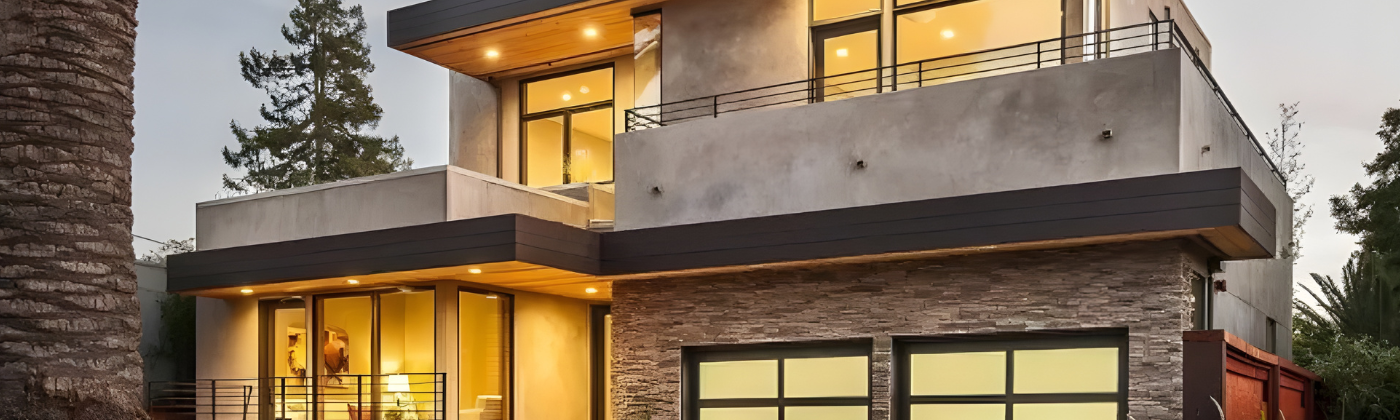
Green Home Builder: What Sustainable Construction Means for Your Connecticut Custom Home
Choosing a green home builder is no longer a niche decision reserved for a small segment of environmentally minded homeowners. For many Fairfield County families planning a custom home, sustainable construction is now a central priority, standing alongside luxury finishes and thoughtful design as a core expectation for the project. Understanding what actually separates a green home builder from a conventional one helps homeowners ask the right questions and set the right priorities from the very start of their project.
Kai Built builds custom homes in Stamford, Greenwich, Darien, Westport, and nearby Connecticut communities. We build sustainability into the process rather than treating it as an add-on. This guide explains how a green home builder works differently. It also explains why those differences matter for comfort, cost, and long-term value.
Connecticut has some of the country’s highest energy prices. Homeowners also better understand how indoor air quality affects daily well-being. As a result, more families seek a green home builder because they care about how their home will perform for decades.
What Defines a Green Home Builder
A green home builder considers energy performance, resource efficiency, and durability in every decision. That includes envelope design, mechanical systems, and material sourcing. This approach goes beyond adding solar panels or bamboo flooring to a conventional home. A true green home builder uses sustainability to guide structural decisions, system selection, and construction methods from the first planning stages.
Homeowners should look for sustainability in the earliest design conversations. It should not appear only as a checklist near the end of the project. A committed green home builder discusses building envelope performance and energy modeling before paint colors or countertops.
Retrofitting sustainability after structural and mechanical decisions are final rarely delivers the same results. Building it in from the start does. During schematic design, a green home builder can shape the home’s orientation, window placement, and structure around performance goals. That avoids working around earlier decisions that limit what the project can achieve.
Building Envelope Performance and Energy Efficiency
The building envelope, meaning the walls, roof, windows, and foundation that separate conditioned interior space from the outdoors, is the single most important factor a green home builder controls. Continuous insulation, careful air sealing, and high-performance windows dramatically reduce the energy required to heat and cool a home throughout the year. In Connecticut, where heating costs are significant for a large part of the year, this performance translates directly into lower utility bills.
A green home builder typically conducts blower door testing during construction to verify that air sealing meets performance targets, rather than relying on assumptions about how the envelope will perform. Kai Built performs this kind of verification on every project, giving clients confidence that their home’s actual performance matches the design intent rather than falling short of it.
Indoor Air Quality and Wellness-Centered Design
A green home builder’s commitment to sustainability naturally extends into indoor air quality, since many of the same building practices that reduce energy use also reduce the introduction of pollutants and allergens into the home. Energy recovery ventilators bring in fresh, filtered outdoor air while retaining conditioned indoor air’s energy, improving air quality without the energy penalty of simply opening windows or running unfiltered mechanical ventilation.
Low-VOC finishes, formaldehyde-free cabinetry, and careful material selection throughout the home further support the wellness-focused living that a green home builder prioritizes. For families with allergies or asthma, or simply those who want their home to actively support their health, these choices carry real, tangible benefits that go well beyond a lower utility bill.
Sustainable Materials and Sourcing
Material selection is another area where a green home builder’s approach differs meaningfully from conventional construction. This includes engineered wood products that reduce old-growth timber use, locally sourced stone and materials that reduce transportation impact, and durable finishes selected for longevity rather than the lowest upfront cost. A green home builder considers not just a material’s appearance, but its full lifecycle, from sourcing through installation to eventual replacement or disposal.
Durability plays a significant role in sustainable material selection as well. A material that lasts twice as long, even at a higher upfront cost, often represents the more sustainable and more economical choice over the life of the home. A thoughtful green home builder walks clients through these tradeoffs so that material decisions reflect genuine long-term value rather than only the initial price tag.
Water Efficiency and Site Sustainability
Beyond energy performance, a green home builder addresses water efficiency and site sustainability throughout the project. Low-flow fixtures, efficient irrigation design, and permeable hardscape materials that reduce stormwater runoff all reduce a home’s environmental footprint while often reducing ongoing costs for the homeowner as well.
Site sustainability also includes protecting existing mature trees where possible, minimizing site disturbance during construction, and managing erosion control carefully throughout the build. In Fairfield County, where many sites include mature tree canopy and sensitive natural features, a green home builder’s site management practices can meaningfully affect both the property’s ecology and its long-term curb appeal.
Renewable Energy and High-Performance Systems
Many homeowners associate a green home builder primarily with solar panels, and while solar is a valuable component of sustainable construction, it works best as one part of a broader high-performance strategy rather than a standalone feature. A well-insulated, well-sealed home requires a smaller solar array to offset its energy use than a poorly performing home would, making the building envelope work done earlier in the process directly relevant to the size and cost of any renewable energy system installed later.
High-performance heat pump systems for heating, cooling, and hot water are another hallmark of a green home builder’s approach. These systems, while carrying a higher upfront cost than conventional fossil fuel systems, deliver substantially lower operating costs and better comfort throughout the year, particularly when paired with the tight building envelope a green home builder prioritizes.
The Cost and Value of Working with a Green Home Builder
Working with a green home builder typically carries a modest cost premium over code-minimum construction, often in the range of three to eight percent of direct construction cost for the building envelope and systems upgrades involved. This premium is recovered over time through lower energy bills, reduced maintenance, and a home that holds its performance and value for decades rather than degrading in efficiency over time.
Kai Built conducts energy modeling on every custom home project, allowing clients to see projected energy use and operating costs at different performance levels before finalizing their specifications. This transparency helps homeowners evaluate the investment in working with a green home builder against their own priorities and timeline for return, rather than treating sustainability as an abstract value with no measurable outcome.
Certifications and Standards to Look For
Homeowners evaluating a green home builder often ask about formal certifications such as ENERGY STAR, Passive House, or LEED for Homes. These programs provide third-party verification of performance claims and can offer useful benchmarks, though certification is not the only path to genuinely sustainable construction. Some of the most rigorous, high-performing custom homes are built to standards that meet or exceed certification requirements without pursuing formal certification, simply because the additional documentation costs do not add proportional value for that particular client.
What matters most is whether a green home builder can explain, in specific and verifiable terms, how a given home’s envelope, systems, and materials were selected and how their performance will be measured. Kai Built works with clients to determine whether formal certification makes sense for their specific project, while always building to the performance standards that certification programs are designed to verify.
Why Kai Built is the Green Home Builder for Fairfield County
Kai Built has built its practice around the belief that luxury and sustainability are not competing priorities but complementary ones. A well-built, high-performance home is inherently more comfortable, more durable, and more valuable over time than one built to minimum code standards, regardless of how luxurious its finishes appear on the surface. As a green home builder serving Stamford, Greenwich, Darien, Westport, New Canaan, Norwalk, and the surrounding Fairfield County communities, we bring this integrated approach to every custom home project.
Our design-build model means the architects, builders, and energy consultants involved in a project work from the same table from the earliest planning stages, rather than handing plans back and forth between disconnected firms. This structure is part of what allows Kai Built to deliver on the promise of a genuine green home builder consistently, project after project, rather than treating sustainability as a marketing claim disconnected from how the home actually gets built.
Our clients do not have to choose between a beautifully designed home and a genuinely sustainable one. Working with a green home builder that treats performance as a design principle from day one means both goals are achieved together, built into the same set of decisions rather than negotiated against each other along the way.
Common Misconceptions About Working with a Green Home Builder
One common misconception is that a green home builder necessarily limits design flexibility, forcing homeowners to choose between an ambitious architectural vision and a sustainable one. In practice, high-performance building science can be applied to nearly any architectural style, from traditional Connecticut shingle-style homes to contemporary designs with expansive glazing. The building science operates behind the walls and within the systems, not in the aesthetic choices visible to the eye.
Another misconception is that working with a green home builder means accepting a longer construction timeline. While some high-performance details require additional coordination during construction, a green home builder experienced in this type of work integrates these steps into the standard schedule rather than treating them as separate, time-consuming add-ons. Kai Built has refined these processes across numerous projects, so sustainable construction proceeds on a timeline comparable to conventional building.
Questions to Ask a Prospective Green Home Builder
Homeowners evaluating a green home builder should ask specific, technical questions rather than accepting general assurances. Useful questions include what air changes per hour target the builder designs to, whether blower door testing is performed and at what stage, what insulation and window specifications are standard versus upgrade options, and whether the builder conducts energy modeling before construction begins.
A green home builder who can answer these questions specifically, with real numbers and real examples from completed projects, is demonstrating genuine expertise rather than marketing language. Kai Built welcomes these detailed conversations with prospective clients, since specificity and transparency are exactly what a sustainability-focused custom home project deserves from the outset.
Long-Term Value and Resale Considerations
Beyond the immediate benefits of comfort and lower operating costs, working with a green home builder carries long-term implications for a home’s resale value. As energy costs continue to rise and buyer awareness of building performance grows, homes built to high-performance standards increasingly stand out in the Fairfield County luxury market, appealing to a buyer pool that values both craftsmanship and long-term efficiency.
A green home builder’s documentation, including energy modeling results, blower door test results, and system specifications, also provides future buyers with concrete evidence of a home’s performance rather than relying on assumptions. This transparency can be a meaningful differentiator when the time eventually comes to sell, giving sellers a documented performance story that conventional construction simply cannot offer.
Ready to Build Green? Let’s Connect.
If sustainability, energy performance, and indoor air quality are priorities for your custom home, Kai Built is ready to talk through what a green home builder approach means for your specific site, program, and goals. We serve homeowners throughout Stamford, Greenwich, Darien, Westport, New Canaan, Norwalk, Ridgefield, and the surrounding Connecticut communities.
Call us at (203) 667-1187 or visit kaibuilt.com to start the conversation. We look forward to showing you what a genuinely committed green home builder can deliver for your family’s next custom home.