

Build on Your Lot Custom Home Builders: How to Turn Land You Already Own Into a Custom Home
Owning the land is a real advantage, and homeowners who already have it are in a different position than buyers still searching for a site. Working with build on your lot custom home builders means the location question is already answered, the land equity is already in place, and the conversation can begin with the home itself rather than with a property search. What it does not mean is that the path forward is automatically simple.
Kai Built works with homeowners in Stamford, Greenwich, Darien, Westport, and nearby Fairfield County communities. They may own a vacant lot, an inherited family property, a subdivided parcel, or a site with a house at the end of its useful life. This guide explains how build on your lot custom home builders approach these projects. It also outlines what to evaluate before design begins.
One principle is worth stating plainly: the land determines much of what can be built. Understand it early, and every later decision improves.
What Build on Your Lot Custom Home Builders Do Differently
Build on your lot custom home builders start with the site rather than with a plan. On a production or spec project, a house design exists first and land is found to accommodate it. When a homeowner already owns land, the sequence reverses. The site’s shape, slope, soils, sun, views, wetlands, setbacks, and utility access guide a design that has not yet been drawn.
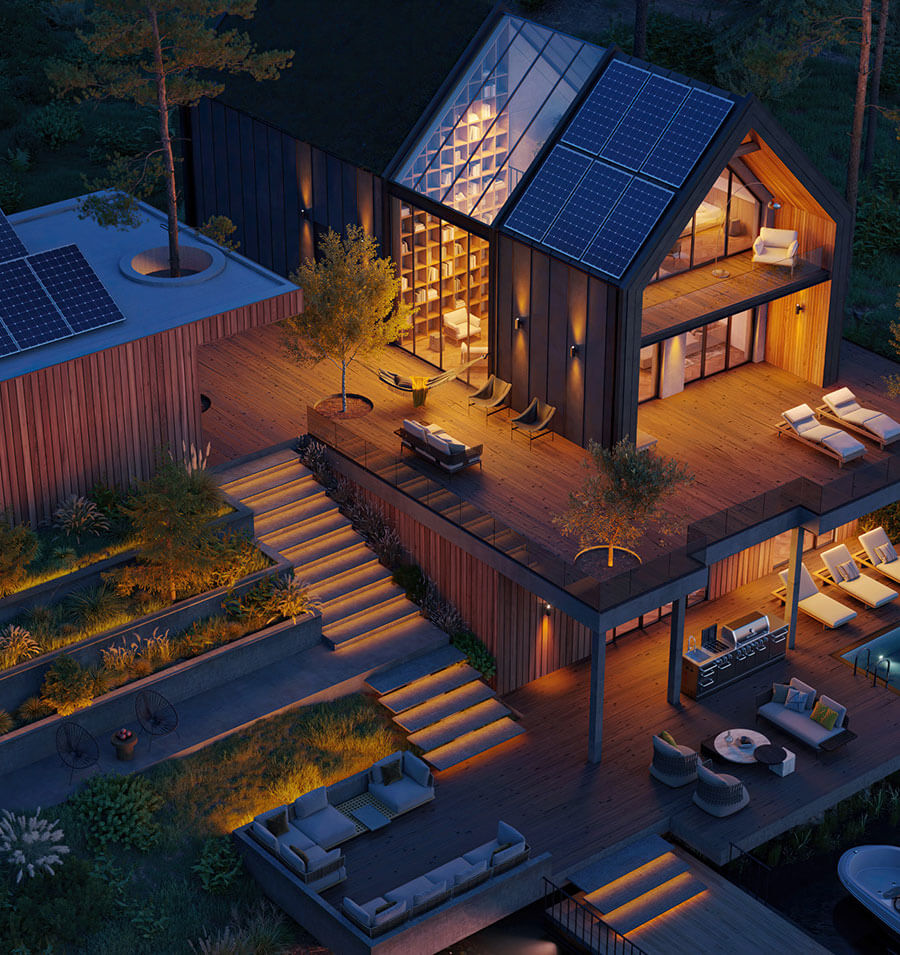
That is the significant advantage of the arrangement. The design team can orient a home for morning light in the right rooms. They can preserve the best trees, work with the grade, and frame the views that exist. Build on your lot custom home builders working this way create homes that feel settled on their property rather than placed on it.
It also means the feasibility work has to come first. Design decisions made before a site is properly understood tend to be expensive to unwind.
Site Feasibility: The First Real Step
Before design begins, build on your lot custom home builders should walk the property and assess buildability. They review topography and the regrading needed for a buildable pad. They also assess subsurface conditions, including the ledge rock common across Fairfield County. Water table, drainage, foundation and septic soils, wetlands, watercourses, and mature trees also matter.
The review also defines the regulatory envelope. It includes zoning setbacks, maximum lot coverage, floor area ratio, height limits, and conservation or historic overlays. The builder should also confirm that the parcel is a legal building lot. Inherited and long-held family parcels can have access easements, unrecorded splits, or lot merger issues. Resolve those issues before permitting.
A thorough feasibility review typically includes a current survey, a soils evaluation, and a wetlands determination when relevant. Builders should not skip these steps just to start design sooner. Doing so does not help their clients.
Utilities and Infrastructure
Utility access is one of the largest cost variables when building on an existing lot. A paved municipal street may have sewer, water, gas, and electric at the curb. A remote parcel may need a private driveway, well, septic system, and extended electrical service. These are very different projects.
Build on your lot custom home builders should price these elements specifically rather than by allowance. Septic design depends on soil percolation results and the proposed bedroom count. In Fairfield County, a constrained site may need an engineered system that costs several times more than a conventional one. Well depth also depends on the site, so builders should verify it rather than assume it.
Driveway length, grade, drainage, and whether it must meet fire access requirements all add cost. So does bringing three-phase or upgraded electrical service to a site set back from existing infrastructure. None of these are obstacles; they are simply numbers that belong in the budget from the beginning.
Zoning and Municipal Approvals
Every Fairfield County town writes its own land use regulations. What a lot permits can vary meaningfully from Greenwich to New Canaan, Westport, and Ridgefield. Builders with experience in a specific municipality understand the regulations and local staff interpretations. That knowledge shapes the proposal and its timeline.
Some projects are as-of-right and proceed through building permit review in a matter of weeks. Others require inland wetlands approval, a zoning variance, coastal site plan review near the Sound, or architectural review, any of which can add three to six months before construction can begin.
Build on your lot custom home builders should map this approval path during feasibility, not after design is complete. A design that requires a variance is not necessarily the wrong design, but the homeowner should choose it knowingly, with the timeline and risk understood in advance.
Financing a Build on Your Lot Project
Financing works somewhat differently when land is already owned. Because the lot typically counts as equity toward a construction loan, homeowners building on land they own often need less cash at closing than buyers who must purchase land and build. Lenders will generally appraise the completed project and lend against that value, with the land’s appraised value contributing to the equity position.
Construction loans disburse in draws tied to completed phases and convert to permanent financing at completion. Build on your lot custom home builders experienced with this structure prepare the documentation lenders require, including detailed cost breakdowns, specifications, and draw schedules, and coordinate inspections so draws are not delayed.
Homeowners should also budget for soft costs that construction loans sometimes cover incompletely: survey work, soils testing, engineering, architectural fees, municipal fees, and utility connection charges. These are real and they arrive early.
Teardown and Rebuild on a Lot You Already Own
Many build on your lot projects involve an existing house. Homeowners who love their location but not their home, or who have inherited a property in a desirable neighborhood, frequently conclude that replacing the structure makes more sense than renovating it, particularly when the existing house has functional layout problems, aging systems, or poor envelope performance that a renovation cannot fully resolve.
These projects carry specific considerations. Demolition requires permits and often hazardous material surveys for asbestos and lead. Existing nonconforming conditions may or may not carry forward under current zoning, which is a question worth answering before design. Existing utilities may be reusable or may need replacement. And neighbors live close by, which makes site logistics and communication part of the job.
Build on your lot custom home builders experienced in teardown work sequence demolition against permitting carefully, so a homeowner is not left with a vacant site waiting on approvals.
Designing a Home Around the Land
This is the most enjoyable part of building on land you already own. With the site understood, design can respond to it specifically: placing primary living spaces where the light is best through the day, orienting glazing for winter solar gain without summer overheating, working with existing grade to create walk-out lower levels rather than fighting it with retaining walls, and framing the views the property actually offers.
Build on your lot custom home builders operating on an integrated design-build model bring construction and cost knowledge into these conversations while the design is still fluid. That means the tradeoffs, structural, mechanical, and financial, are visible at the moment decisions are being made rather than surfacing later as change orders.
The homes that result feel intentional. They sit correctly on their land, they hold light well, and they support the way a family actually lives on that particular property.
Performance, Wellness, and Building for the Long Term
Homeowners building on land they own are usually building for a long horizon, often with no intention of moving again. That changes what is worth investing in. Envelope performance, air sealing, balanced ventilation, indoor air quality, humidity control, and durable exterior materials all compound in value across decades of occupancy.
Kai Built approaches every project this way, with continuous insulation, verified airtightness through blower door testing, correctly sized high-performance mechanical systems, filtered fresh-air ventilation, and materials chosen for longevity and low chemical load. Build on your lot custom home builders who treat these as standard rather than as upgrades deliver homes that remain comfortable and efficient long after the finishes have gone in and out of style.
Timelines: What to Expect
A build on your lot project in Fairfield County generally runs eighteen to thirty months from first conversation to move-in. Feasibility and design typically occupy six to twelve months, municipal approvals one to six depending on complexity, and construction twelve to eighteen. Teardown projects add demolition and abatement time.
Connecticut’s seasons influence sequencing. Build on your lot custom home builders plan foundation and site work to avoid the worst of winter where possible and aim to get a structure weather-tight before cold weather arrives, which protects both the schedule and the quality of interior work.
Homeowners should be cautious about unusually short timelines quoted during a sales conversation. Schedule optimism is inexpensive to offer and costly to correct.
Common Misconceptions About Building on Land You Own
The most common assumption is that owning land makes the project meaningfully cheaper overall. It reduces the cash required and eliminates the search, both of which are real advantages, but the cost of the home itself is driven by design, specification, and site conditions rather than by how the land was acquired. A difficult site owned outright can carry higher development costs than an easier site purchased today.
A second assumption is that a lot handed down through a family is automatically buildable. Legal building lot status, access, easements, and current zoning compliance all need verification, and build on your lot custom home builders should confirm these early rather than late. The answer is usually favorable, but it should be an answer rather than an assumption.
A third is that a plan a homeowner already likes can simply be placed on the property. Occasionally that works. More often the site’s grade, setbacks, or solar orientation call for adjustments, and homes that were adapted thoughtfully to their land consistently live better than homes that were merely fitted onto it.
Questions to Ask Build on Your Lot Custom Home Builders
Ask whether the builder will walk the property and provide a feasibility assessment before design begins. Ask how many projects they have completed in your specific town and what the approval process looked like. Ask how site work, septic, well, and utility extension are priced, by allowance or by specific estimate. Ask what performance standards are standard versus upgrade, and whether airtightness is tested. Ask how the budget is documented and how change orders are handled.
Build on your lot custom home builders with genuine experience will answer these specifically, with examples from completed projects. Vague answers about handling things as they come up are a reliable preview of how the project will actually unfold.
Why Kai Built
Kai Built is a design-build firm, which means the people responsible for constructing your home are involved in evaluating your land and designing the house from the first conversation. For homeowners building on land they already own, that integration is where the value shows up: site realities inform design, design informs cost, and cost is visible while decisions are still open.
We serve homeowners throughout Stamford, Greenwich, Darien, Westport, New Canaan, Norwalk, Ridgefield, and the surrounding Fairfield County communities, and we bring a wellness-centered, high-performance approach to every project. Among build on your lot custom home builders, we believe the work begins with understanding the land honestly, then designing a home that belongs on it.
Ready to See What Your Land Can Become? Let’s Connect.
If you own land in Fairfield County and are thinking about building, Kai Built is glad to walk the property with you and talk through what is realistically possible, including the site conditions and approval path that will shape the project.
Call us at (203) 667-1187 or visit kaibuilt.com to start the conversation. Among build on your lot custom home builders serving Connecticut, we would welcome the chance to help you turn land you already own into a home designed entirely around the way you live.