

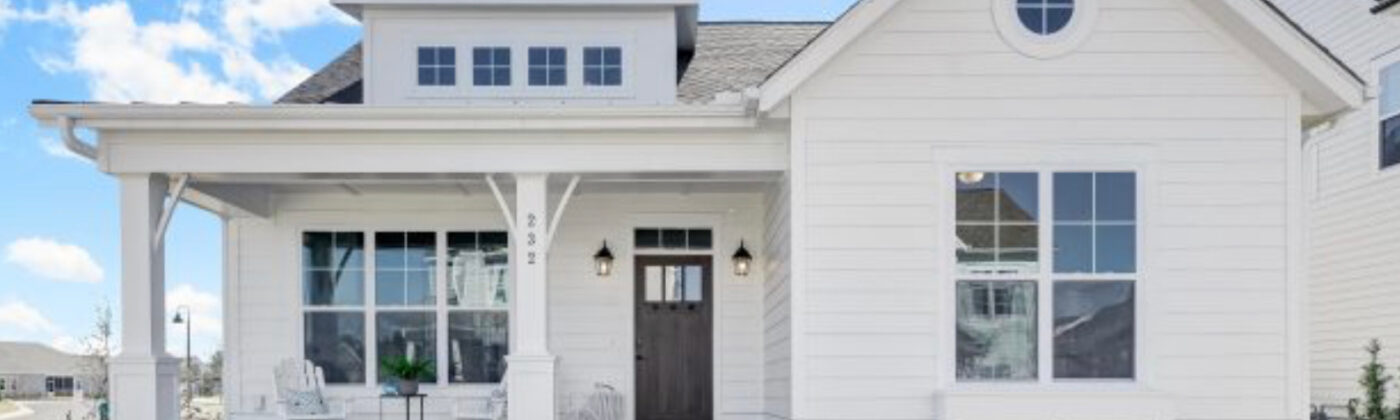
High Performance Homes: How a Better Built House Feels Through Every Connecticut Season
Most conversations about high performance homes begin with numbers, but the people who live in them rarely talk about numbers at all. They talk about a January morning when the floors were warm underfoot, a humid August afternoon when the air inside still felt light, and a spring week when the pollen outside never seemed to make it indoors. Those everyday moments, repeated across every season, are what high performance homes are really built to deliver.
Kai Built designs and builds high performance homes for families in Stamford, Greenwich, Darien, Westport, and throughout Fairfield County. This guide follows the Connecticut year from winter through fall. It explains what high performance homes do differently each season. It also covers what to weigh before building and how to evaluate a builder.
Whether you are relocating from New York City or rebuilding on a lot you have owned for years, Connecticut weather will test your house. High performance homes handle those tests quietly. You can watch the weather through the windows instead of feeling it inside. The sections below explain how that happens and what it takes to get it right.
Why Fairfield County Families Choose High Performance Homes
Connecticut asks a lot of a house. It brings cold winters, damp springs, humid summers, and coastal storms off Long Island Sound. Families choose high performance homes because conventional houses often struggle in one or more seasons. A home that stays calm and comfortable all year fits the way they want to live.
Many families we meet are relocating from Manhattan or Brooklyn. There, they lived in apartments with steady temperatures and little sense of the weather outside. A drafty older colonial can be an unwelcome surprise. High performance homes offer space, land, and light without sacrificing indoor steadiness. The goal is a home that feels open to its setting while remaining quietly protected from it.
Others are long-time Fairfield County residents. They have spent years managing ice dams, damp basements, and bedrooms that never quite warmed up. For them, high performance homes offer a chance to stop working around the house and start enjoying it. They know what Connecticut weather feels like inside a typical home. Now they are ready for something better.
What to Consider Before Building High Performance Homes
Before you commit to high performance homes on your wish list, consider how your family uses a house throughout the year. Some households spend winters in the kitchen. Others spend summers on a screened porch. Many work from home and need a quiet, steady office in every season. Let those patterns shape the design before you choose materials.
Your site matters as much as your plans. Orientation, tree cover, wind exposure, and shoreline proximity all affect how high performance homes perform. A backcountry Greenwich lot with mature hardwoods offers different opportunities than a Westport parcel near the water. That parcel may have open southern exposure and coastal winds. Your builder should study these conditions. Then, they should explain how the site will shape window placement, roof overhangs, and the main living spaces.
Finally, decide how much building science you want to understand. Also consider how involved you want to be. High performance homes require decisions about insulation, air sealing, ventilation, and mechanical systems. Some owners enjoy learning about them, while others prefer to delegate. Either approach works when your builder clearly explains the tradeoffs and documents the promises.
The Process Behind High Performance Homes
The process behind high performance homes starts with goals, not equipment. Early conversations cover comfort, air quality, quiet, and long-term operating cost. The design team then sets performance targets for the envelope and systems. It models the home’s expected performance in Connecticut winter and summer conditions. The team checks each later decision against those targets, not habit.
During design, the team shapes high performance homes around sunlight and shade. It places glazing to welcome low winter sun. It sizes overhangs to limit high summer heat. The team draws wall, roof, and foundation assemblies as continuous layers. Insulation and the air barrier can then wrap the house without gaps. It sizes mechanical and ventilation systems for the finished home’s actual loads. Those loads are far smaller than in a conventional house.
Construction determines whether high performance homes succeed or fall short. Details on paper mean little without careful field execution. The team inspects air sealing while walls remain open. Testing confirms envelope performance. The team commissions systems to ensure they run as designed. Local building departments in towns like Stamford and New Canaan inspect for code compliance. The builder must hold itself to the higher performance standard.
Benefits of Living in High Performance Homes Through the Year
Winter is where high performance homes make their first impression, especially during a long cold stretch or a nor’easter that knocks out power across the county. Continuous insulation and a tight envelope keep rooms evenly warm without the cold drafts near windows or the chill in rooms over the garage. If the power does go out, a well-sealed house holds its warmth for far longer than a leaky one, which buys time and peace of mind.
Spring and summer bring different tests, from heavy pollen in April to the sticky humidity that settles over the shoreline in July and August. High performance homes bring in fresh air through a filtered, balanced ventilation system rather than through random gaps, so allergens stay outside and humidity can be managed. The result is indoor air that feels clean and light even when the air outside does not.
Fall is often the season owners appreciate most, because it reveals how little high performance homes need to work to stay comfortable. Through the long shoulder months, when a conventional house cycles between heating and cooling, a well-built envelope keeps conditions steady with very little energy. Add the quiet that comes from dense insulation and well-sealed windows, and the house becomes a calm retreat in every season.
Common Challenges With High Performance Homes
One common challenge with high performance homes is that quality depends on many trades working to the same standard, from framers and window installers to electricians and plumbers. A single unsealed penetration or a poorly flashed window can undermine work that dozens of other people did well. That is why coordination, training, and inspection matter as much as the specifications themselves.
Another challenge is ventilation, which high performance homes depend on because a tight envelope no longer leaks air in uncontrolled ways. If the ventilation system is undersized, poorly balanced, or never commissioned, the house can feel stuffy or hold too much moisture. Owners should expect clear guidance on how the system works, how filters are changed, and when it should be serviced.
A third challenge is the gap between how high performance homes are marketed and how they are actually built. Many builders use the phrase, but fewer can show testing results, design models, and finished projects that live up to it. Asking for documentation from recent homes, and speaking with the families who live in them, is the most reliable way to tell the difference.
How to Budget for High Performance Homes
When you budget for high performance homes, think about the investment in two parts: what you spend to build, and what you spend to live in the house for decades. Better insulation, higher quality windows, careful air sealing, and balanced ventilation add to the upfront cost. They also reduce what the house needs from its heating and cooling equipment, which can allow smaller systems and lower monthly energy use.
It also helps to identify which parts of high performance homes are easy to upgrade later and which are not. Appliances and some mechanical equipment can be replaced over time, but wall assemblies, foundation insulation, window placement, and roof details are effectively permanent once the house is finished. Directing budget toward those permanent elements is usually the wisest choice, even if it means simplifying something more visible.
Ask your builder to show how each performance decision affects both construction cost and expected operating cost, so you can weigh them side by side. Connecticut utility rates are high, and high performance homes are designed to reduce exposure to them for as long as you own the house. Incentive programs offered through Energize Connecticut and the local utilities may also help, so ask what is currently available for your project.
Why Kai Built for High Performance Homes
Kai Built builds high performance homes because we believe how a home feels matters just as much as how it looks. Our design and construction teams work together from the first site visit, so light, air, comfort, and efficiency are shaped into the plan rather than added at the end. The result is a home that feels calm, intentional, and entirely your own, in January as much as in June.
We serve families in Stamford, Greenwich, Darien, Westport, New Canaan, Norwalk, and Ridgefield, and we know how the shoreline, the ridgelines, and the wooded lots of Fairfield County shape each site. Our high performance homes are modeled during design, tested during construction, and commissioned before move-in. We document what we promised and what we measured, so you can see the work behind the comfort.
Just as important, we treat high performance homes as wellness projects, not only efficiency projects. Natural light, fresh filtered air, quiet interiors, and steady temperatures all support better sleep, clearer focus, and an easier daily rhythm. Those are the qualities our clients describe years later, and they are the reason we build the way we do.
Ready to Talk About High Performance Homes?
If you are planning a new home in Fairfield County and want to understand how high performance homes would feel on your site, Kai Built would be glad to start the conversation. We will walk your property, talk through how your family lives across the seasons, and explain what a well-built envelope and ventilation strategy would mean for your project. There is no pressure, only a clear and honest discussion of what is possible.
Our team works with homeowners throughout Stamford, Greenwich, Darien, Westport, New Canaan, Norwalk, Ridgefield, and the surrounding Connecticut communities. Call (203) 667-1187 or visit kaibuilt.com to schedule a consultation about high performance homes designed around the way you live, in every season of the year.