

Build on Your Land: A Complete Guide to Custom Home Construction on Property You Already Own
Deciding to build on your land, whether it is a wooded parcel that has been in the family for years or a lot you purchased specifically for this purpose, is one of the most personal paths to a custom home. Unlike buying an existing house or building in a planned development, choosing to build on your land means the home is shaped entirely around a specific piece of ground, with its own topography, light, views, and character. For homeowners across Fairfield County, building on land they already own is often the clearest route to a home that genuinely reflects the way they want to live.
Kai Built has built custom homes for clients who own land in Stamford, Greenwich, Darien, Westport, New Canaan, and nearby Connecticut communities. We understand why this path is rewarding and sometimes more complex than building on a spec lot. This guide explains how to build on your land, from early site evaluation through move-in day.
Why Homeowners Choose to Build on Their Own Land
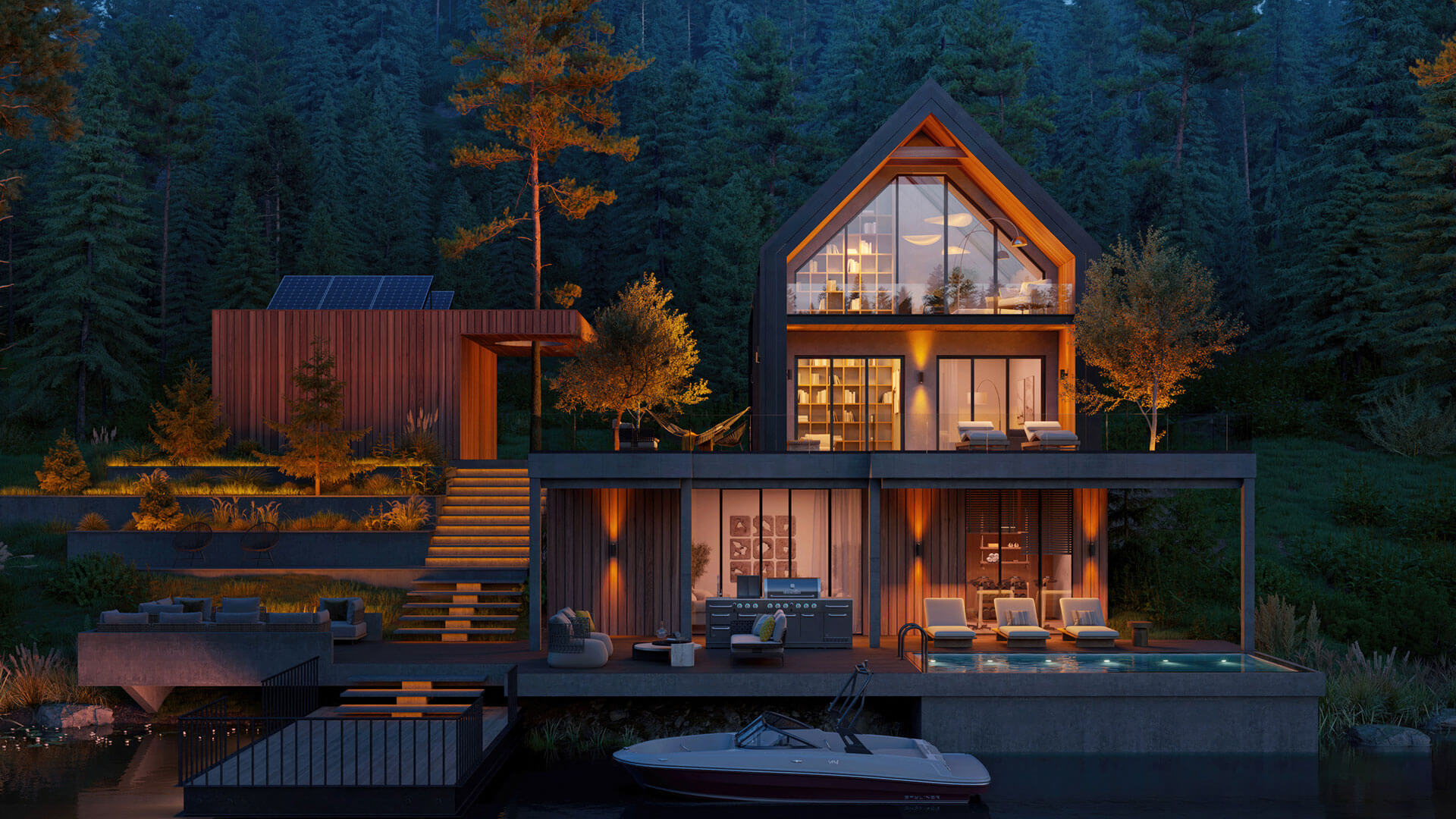
Building on your land offers a simple advantage: you can design the home around the property. The property does not become an afterthought to a predetermined floor plan. When you build on your land, you can decide where the house sits. You can also orient it for natural light, views, trees, slopes, and water features from the start.
This approach differs from buying in a subdivision. Developers often level and standardize lots, then apply a limited selection of floor plans. Homeowners who build on your land often feel connected to the property. That connection may come from family history, years of admiring a parcel, or a setting that cannot be replicated. The freedom to design intentionally leads many Fairfield County homeowners to choose this path over an already-built home.
Evaluating Your Property Before You Build
Before design work begins, complete a thorough site evaluation. It shows what your land can support and which challenges it may present. When you plan to build on your land, include a topographic survey, soil review, and utility-access confirmation. Each factor affects design and cost.
Soil conditions matter in Fairfield County, where ledge rock and variable subsurface conditions are common. Geotechnical testing shows whether the site can support a standard foundation. It also identifies the need for deeper footings or specialized foundation systems. Without testing, homeowners can encounter costly surprises during excavation. We recommend geotechnical evaluation before finalizing a design or budget.
Utility access is another early consideration. Some properties have water, sewer, electric, and gas available at the road. Larger or rural parcels may need well and septic systems or costly utility extensions. Knowing which situation applies shapes the budget and timeline to build on your land.
Zoning and wetlands regulations complete the site evaluation process. Each Fairfield County municipality sets its own setbacks, height restrictions, and lot coverage limits. Wetlands or watercourse regulations may also affect where you can site a home. An experienced builder reviews these rules early. That review helps avoid revisions after the design is finalized.
The Design Process for a Home Built on Your Land
After the site evaluation, design begins by considering how the house should relate to the property. Plan the orientation for natural light. Place primary living spaces around views and privacy. Also consider trees, grade changes, and natural drainage patterns.
Thoughtful siting is a valuable reason to build on your land. It gives you more control than a predetermined lot layout. A home can capture morning kitchen light and afternoon light in a primary living space. It can also preserve privacy from neighboring properties. An experienced design build team translates your land’s character into a calm, intentional home that connects to its setting.
Architectural style also matters during this phase. Homeowners who build on your land often want exterior materials and massing that suit the landscape. The design may reference New England vernacular architecture. Or it may take a contemporary approach that respects the site’s natural features.
Permitting and Approvals
Permits and approvals are critical when you build on your land in Connecticut. Depending on the property, you may work with the local zoning and planning department. You may also need health department approval for septic systems. The inland wetlands commission may review properties near regulated wetlands or watercourses.
The permitting timeline for a home built on your land varies significantly by municipality and by the complexity of the site. A straightforward lot with no wetlands concerns and existing utility access may move through approvals in a matter of months, while a more complex site with wetlands review or variance requirements can take considerably longer. An experienced builder who has navigated these processes repeatedly in Fairfield County towns can set realistic expectations early and help avoid the delays that come from incomplete or improperly prepared applications.
Site Preparation and Construction
Once permits are secured, construction on land you already own begins with site preparation: clearing, grading, and any necessary work to prepare the building pad and access. The scope of this phase depends heavily on the property’s existing condition. A wooded lot requires selective clearing and tree protection planning, while a site with significant grade change may require retaining walls or extensive earthwork before foundation work can begin.
From there, construction on a home built on your land follows a sequence familiar to any custom build: foundation, framing, mechanical systems rough-in, insulation and air sealing, and interior and exterior finishes. What differs when you build on your land, compared with a production lot, is the degree to which site-specific conditions influence sequencing and detailing throughout the process. A steep driveway, an existing well, or protected trees near the foundation all require specific planning that a generic building process would not need to account for.
Budgeting Considerations Unique to Building on Your Own Land
Budgeting to build on your land requires accounting for site-specific costs that homeowners purchasing a home in a planned development typically do not encounter directly. Site development costs, including clearing, grading, driveway construction, and utility connections, can range widely depending on terrain and existing infrastructure, and should be estimated specifically for your property rather than assumed from a general average.
Homeowners who already own their land also benefit from a real cost advantage: land cost is fixed and, if the property was purchased or inherited some time ago, may represent significant equity going into the project. This can meaningfully change the overall project economics compared with purchasing both land and a home simultaneously. A clear-eyed budget for anyone planning to build on your land should separate site development costs, direct construction costs, and soft costs such as design, permitting, and financing, so that the full scope of the investment is understood before design decisions are finalized.
Working With an Architect and Builder Together
Homeowners planning to build on your land benefit significantly from bringing the architectural and construction teams together early, rather than completing a full architectural design before a builder is ever consulted. Under a design build approach, site-specific realities, such as ledge rock, drainage patterns, or a challenging setback, are factored into the design from the start, rather than discovered after a design is finalized and the project goes out to bid.
This coordination is especially valuable for properties with unusual topography or natural features worth preserving. A design build team walking the property together, architect and builder side by side, tends to produce a design that is both more buildable and more responsive to what makes the land special in the first place.
Financing a Home Built on Land You Own
Financing often works differently when you build on your land compared with a traditional home purchase. Most homeowners use a construction loan that converts to a permanent mortgage once the home is complete, and the fact that the land is already owned, free of an existing mortgage or with significant equity, can favorably affect loan terms and the amount of cash needed at closing. Speaking with a lender experienced in construction financing early in the process, alongside your builder, helps ensure your budget and financing plan are aligned before design work begins.
Common Challenges When Building on Land You Already Own
Even with careful planning, homeowners who build on your land should be prepared for a few common challenges. Access can be more complicated on wooded or sloped properties, sometimes requiring a longer or more expensive driveway than a flat, road-adjacent lot would need. Tree removal and protection also require thoughtful planning, since Fairfield County homeowners often want to preserve mature trees near the building site, which affects both the construction sequence and the placement of equipment and material staging areas.
Drainage is another factor that deserves early attention. Every property manages stormwater differently based on its grade and soil composition, and a home built on your land needs a drainage plan that protects the foundation and prevents water from affecting neighboring properties. An experienced builder addresses this during design, incorporating grading and drainage solutions into the site plan rather than treating it as an afterthought once construction is underway.
Finally, homeowners should understand that timelines to build on your land can be less predictable than a production home build, simply because every site is unique. Weather, unforeseen soil conditions, and municipal review timelines all introduce variables that a standardized building process does not typically encounter. Working with a builder who communicates honestly about these variables, rather than promising an unrealistically fixed schedule, leads to a far less stressful experience overall.
Why Kai Built Is the Right Partner to Build on Your Land
Kai Built approaches every project to build on your land with a design build model that keeps site conditions, design intent, and budget aligned from the very first conversation. Our team evaluates your property thoroughly before any design work begins, so that the home we design is genuinely suited to the land, not a generic plan adjusted after the fact to fit.
Every home we build reflects our broader philosophy: wellness-centered design, abundant natural light, and construction detailing built to perform for decades. When you build on your land with Kai Built, that philosophy extends to how we site the home itself, ensuring the finished result feels calm, intentional, and deeply connected to the property it sits on.
We serve homeowners throughout Stamford, Greenwich, Darien, Westport, New Canaan, Norwalk, and the broader Fairfield County region, bringing local permitting expertise and building science knowledge to every project, regardless of how straightforward or complex the site.
Ready to Build on Your Land?
If you own land in Fairfield County and are ready to explore what it would take to build your custom home there, Kai Built would welcome the opportunity to walk your property with you and talk through the possibilities. From initial site evaluation through final walkthrough, our team is with you at every step of the process.
Whether your property has been in the family for generations or you purchased it specifically with a future custom home in mind, our team will help you understand exactly what the land can support and design a home that feels like a natural extension of the property itself.
Call us at (203) 667-1187 or visit kaibuilt.com to schedule a consultation and take the first step toward building on the land you already call home.